Livigno Snow Park to Stage Final Parallel Giant Slalom of 2025-26 World Cup on 10 March
Livigno Snow Park will host the last parallel giant slalom of the Milano Cortina Snowboard World Cup cycle on 10 March, a race organisers bill as the most geographically balanced finale in 20 years.
[IMAGE_PLACEHOLDER_0]
Nine Countries Already Own Crystal Globe Hardware This Season
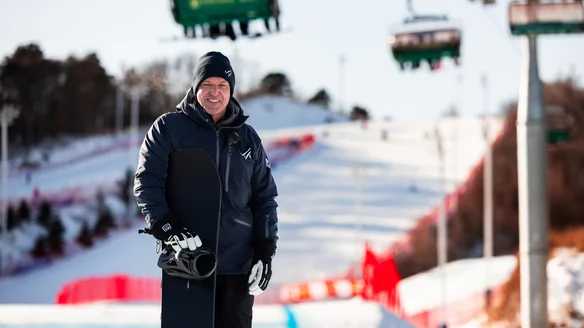
Austria, Italy, Germany, Japan, the United States, Canada, Bulgaria, South Korea and China have all claimed podium places since November, up from six nations at the same point last winter. Race Director Uwe Beier told reporters in Rogla that every World Cup stop produced a fresh final-four lineup, a spread he credits to off-season sprint camps and modular plastic slopes that let riders rehearse gate tactics through summer.
FIS data show 22 federations logged at least one top-ten finish, against 15 the previous season. Beier says the shift is structural: smaller teams now run autumn blocks on artificial surfaces, trimming travel bills and adding roughly 40 days of snow-free practice before the first natural snow.
Lower Speed Keeps Veterans in Contention
Parallel alpine’s twin-lane knockout caps speed at about 65 km/h, roughly 30 % slower than snowboard-cross packs. Medical logs list a 1.3 % injury rate across 312 World Cup starts this winter—half the figure recorded in speed disciplines. The controlled setting lets Claudia Riegler, 45, and Roland Fischnaller, 41, battle teenagers who were not yet born when the pair collected their first World Cup points.
Course crews use identical gate spacing and pitch for both finals, a symmetry rare in ski racing where women’s tracks are often shortened. Depth is tight: women’s brackets average 48 entries this season, only four fewer than the men’s sheet.
Thin Snow Base Still Delivers Broadcast-Ready Race
A regulation parallel lane needs just 30 cm of packed base on a 180 m-wide ribbon, conditions most intermediate pistes achieve after a single storm. “We can shape 220 m by hand, drop the net, and still deliver 4K pictures,” Beier said. The modest footprint appeals to resorts facing shorter natural seasons; Chongli’s Secret Garden crew erected twelve fan guns last November and staged a World Cup three weeks later.
New FIS rules approve reusable polymer fencing and LED lane markers, cutting freight weight by 28 % compared with 2018 rigs. Snowmaking quotas for parallel events are now 40 % lower than for downhill races of similar airtime.
Teenagers Crash Title Race After Fast-Track Pipeline
Junior-to-elite progression that once demanded eight seasons has shrunk to five, Beier’s internal tracking shows. Nineteen-year-old Tervel Zamfirov of Bulgaria jumped from 2023 Junior world champion to World Cup podium in December, while Japan’s Miki Tsubaki, 20, owns two victories this season after graduating from the Asian Cup.
Uniform snow-quality standards and free live-streaming introduced for Continental Cups in 2024 let scouts benchmark juniors against common metrics, triggering earlier federation funding. “Continental-cup fields today are deeper than Europa-Cup ski racing was fifteen years ago,” Beier noted.
[IMAGE_PLACEHOLDER_1]
Livigno Crews Compress Six-Week Build Into 14 Days
Municipal permits delayed construction until mid-January, forcing organisers to stockpile 80,000 cubic metres of machine-made snow in ten nights of cold-wave production. Final grading wrapped on Tuesday; surface injection begins Thursday with net installation scheduled for Saturday. Night-time lows are forecast to stay below –4 °C through race day, eliminating the spring-slush risk that plagued the 2023 finals in Grasgehren.
[IMAGE_PLACEHOLDER_2]
Olympic Start List May Match 18-Year-Olds With 40-Somethings
Men’s draws could pit 39-year-old Austrian Benjámin Karl—winner in December—against 18-year-old Chinese wildcard Gao Dezhi, who swept the Youth Games in January. On the women’s side, Germany’s Ramona Hofmeister has not lost a heat since returning from a November wrist fracture, yet Italian eyes are on Lucia Dalmasso, whose victory at the national championships last month drew a live audience on RAI.
“Seeding matters less here than in any other snowboard discipline,” Beier warned. “A rider drawn 17th can still carve a path to gold if they read lane transition correctly.”
Action Steps
- Download the FIS Live app before 8 March to see qualification seeding released at 18:00 CET.
- Reserve shuttle seats on the Milano Cortina spectator bus; the Bormio–Livigno route fills quickly.
- Review the parallel-GS rule: athletes swap lanes after the first run; fastest aggregate time advances—knowledge that doubles viewing enjoyment.
- Coaches scouting talent can stream the Youth Cup finals from Passo Tonale (15-17 March) for tactical benchmarks used by national teams.
Source: FIS Communications


Comments