 Figure skating
Alysa Liu Wins Olympic Figure Skating Gold, Ends 24-Year U.S. Drought
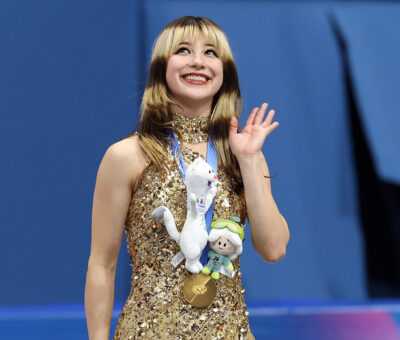
Alysa Liu, 20, posted the highest women’s free-skate score of the Milan Winter Games on Saturday, becoming the first U.S. woman to win Olympic figure-skating gold since Sarah Hughes in 2002 and ending a 24-year American drought. Liu’s 150.20 Free Skate Flips Final Order Skating third in the last group, Liu opened with a textbook triple Lutz-triple toe and later added a triple Lutz-double Axel-double toe cascade—combinations no rival matched for base value. Judges gave positive grades of execution on seven of 12 elements, lifting her free-skate segment to 150.20 and her combined total to a career-best 226.79. The score vaulted her past overnight leader Ami Nakai and reigning world champion Kaori Sakamoto, erasing a 3.42-point short-program deficit. Secret Program Swap Pays Off Liu had disguised her strategic pivot all week, rehearsing a Lady Gaga medley while quietly returning the Donna Summer remix she used to win the 2025 world title to her locker. Choreographer Massimo Scali said the switch—revealed only when the six-minute warmup began—was designed to “lock her into muscle memory she already trusted.” The opening synth sting of “Hot Stuff” drew an audible gasp; by the final cymbal crash, the arena was on its feet and the scoring table was revising U.S. Olympic history. Sakamoto, Nakai Complete Japanese Sweep Kaori Sakamoto’s Edith Piaf free skate started with a double Axel-triple toe-double toe worth 12.60 base points, but a tilted triple flip forced her to drop a planned combination and cost roughly three points. She still earned 147.67 for the segment and 224.90 overall—1.89 behind Liu—good for silver and Japan’s fifth figure-skating medal of the Games. Seventeen-year-old Ami Nakai, bidding to become the youngest women’s champion since Tara Lipinski, popped the second jump of an early Lutz-toe and slipped to ninth in the free, yet her short-program buffer held for bronze at 219.16 and gave Japan its largest Olympic figure-skating haul since 1908. Pipeline Behind New U.S. Champion Liu becomes only the eighth American woman to top an individual Olympic podium, and her post-Milan plans—college courses, show tours, “maybe some pottery”—leave the national program searching for successors. Amber Glenn’s 147.52 free skate, third-best of the night, rocketed her from 13th to fifth and signaled veteran depth. Nineteen-year-old Isabeau Levito, undone by a downgraded loop, still owns the second-highest season total among U.S. women. Junior-world medalist Sophia Goldstein, 16, sits next in line, giving the federation a three-tier ladder to defend the reclaimed momentum. From Burnout to Beijing-Style Breakthrough Liu’s win carries a mental-health backstory officials hope reshapes development protocols. After quitting elite training in 2022 she volunteered at a San Francisco food bank, took weekly sports-psychology sessions, and logged more hours on a pottery wheel than on ice for six straight months. “I’m not a unicorn,” she said. “I’m proof that stepping away can be the healthiest way to step up.” U.S. Figure Skating has since expanded grants for off-ice counseling and now prints crisis-line information on all qualifying-event badges. Action Steps for Young Skaters Block one calendar hour every week for a non-skate activity—music, art, tutoring—so identity isn’t welded to placement sheets. Coaches: add a 1-to-5 mood prompt to daily training logs; share red-flag trends with parents before they harden into burnout. Parents: pre-plan one competition-free weekend each month; treat it as non-negotiable family time, not a reward. Club boards: budget for on-site mental-health staff at regionals and post national crisis-line numbers in every event program. Source: U.S. Figure Skating communications
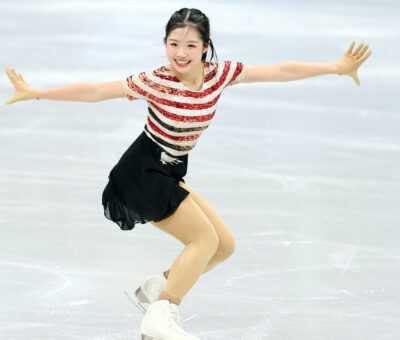 Figure skating
Japan Historic Podium Sweep After Women's Short Program at 2026 Olympics
Japanese Teens Sweep Olympic Podium in Women’s Short Program Seventeen-year-old Ami Nakai stunned the 2026 Milano-Cortina Games on Wednesday night, topping a historic Japanese sweep of the women’s figure-skating short program while a sold-out Milan crowd watched the podium order flip in real time. Nakai Lands First-Clean Triple Axel, Takes Lead Nakai, fourth at December’s national championships, cracked 78 points for the first time overseas. She opened with the only fully rotated triple Axel of the session, added a triple Lutz-triple toe and a solo triple loop set to Nino Rota’s “La Strada,” and exited with 78.71—more than five points above her previous best. The score gives her a 1.48-point lead over three-time world champion Kaori Sakamoto and a 4.71-point cushion over world bronze medalist Mone Chiba. “I just wanted to enjoy the Olympic ice,” Nakai said through an interpreter, yet her skate rewired every medal forecast that had centered on Sakamoto and American Alysa Liu. Sakamoto Feeds Off Team Momentum for Second Skating minutes after Japan’s pair triumph and two nights after Shoma Uno defended the men’s title, Sakamoto admitted her knees shook until mid-program fatigue “turned nerves into fuel.” A slight under-rotation on the second jump of her triple Lutz-triple toe trimmed about 1.2 points, leaving her at 77.23—still high enough to beat every non-Japanese entry. “Watching our other champions made me think, ‘We can do this again,’” she told reporters, referencing Japan’s first-ever team gold earlier in the week. Her component marks, second only to Nakai’s, keep the 24-year-old within striking distance heading into Thursday’s free skate. Liu Keeps U.S. Hopes Alive With Personal Best World champion Alysa Liu halted an otherwise shaky U.S. evening, landing a triple Lutz-triple loop for 76.59 and remaining the only non-Japanese skater within three points of the lead. Judges tagged the combo a quarter-turn short, yet clean triple flip and level-four spins preserved a buffer over Neutral Athlete Adeliia Petrosian (75.04) and European champion Anastasiia Gubanova (74.21). Liu’s skate to Ben Howard’s “Promise” keeps the United States in the hunt for its first individual ladies’ medal since Tara Lipinski in 1998. Teammate Isabeau Levito sits eighth at 72.60, while Bradie Tennell’s fall on an under-rotated triple loop left her 14th at 67.88. Nine Women Top 70 Points, Setting Depth Record The scoring sheet shows how far women’s skating has moved since the +5/-5 Grade of Execution scale arrived in 2018: nine athletes cracked 70 points, breaking the previous Olympic high of six. Belgium’s Loena Hendrickx used a triple flip-Euler-triple Salchow to grab 73.87, South Korea’s Haein Lee matched her season best at 71.95, and Romania’s Julia Sauter surprised even her coaches by landing a clean triple Lutz-triple toe for 70.12—good for 16th and her second Olympic free skate. “The standard has risen that much,” said Canada’s Madeline Schizas, who popped a loop, drew under-rotation calls, and missed the 24-skater cut by 0.56. Jump Arsenal Will Decide Thursday Medals With 2.71 points separating first from fourth, the final will hinge on who slots second triple Axels or triple-triple-triple combos into the seven-jump limit. Nakai has never tried two triple Axels in one senior program; Sakamoto landed the combo en route to her 2024 world title; Liu plans one in the second half for a 10-percent bonus. Chiba, fourth at 74.00, may revive the flip-toe-toe salvo that earned her world bronze last March. Forecasts call for −2 °C rink-level temperatures and low humidity—conditions the Japanese contingent has historically exploited for firmer, faster ice. Quick Viewer Guide for the Free Skate Download the ISU live-scoring app and enable GOE alerts—single downgrades swing roughly three points. Compare planned jump layouts on the official start list; look for the “2A” or “3A” notation that flags a second triple Axel. Watch warm-up groups, not just the final six; the penultimate quartet skates on fresher ice and can spoil the standings. Track rink-side humidity on Olympic social feeds—Milano’s mountain air can soften landings after 21:00 local time. Save the post-event press conference stream; coaches often reveal last-day boot-blade tweaks that shape jump tactics. Sources: ISU results sheet, Olympic Information Service, on-site interviews
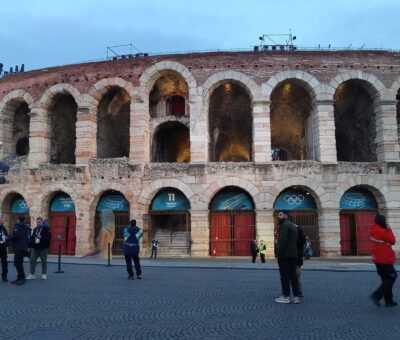 Figure skating
Figure Skating Closing Ceremony 2026: Evan Bates Carries U.S. Flag in Verona Arena
Verona’s Roman Arena Hosts 2026 Winter Games Figure-Skating Finale The 2,000-year-old amphitheater in Verona replaced a conventional ice rink Sunday night to stage the Milano-Cortina figure-skating finale, as athletes carried national flags under torchlight to close the Olympic team event. Evan Bates Becomes First U.S. Ice-Dance Flag Bearer Five-time Olympian Evan Bates stepped onto the limestone track as the first American ice dancer—and first U.S. figure skater since 1968—to lead the delegation at a Winter Games closing ceremony. The 31-year-old had just helped the United States secure team gold and, with wife Madison Chock, ice-dance silver. The two medals give Bates the biggest U.S. skating haul of the Games and place him in a ceremonial role last filled by a figure skater when Scott Hamilton opened Lake Placid 1980. Medalists Lead Flag Parade Under Ancient Arches Kazakhstan’s men’s champion Mikhail Shaidorov and Japan’s women’s silver medalist Kaori Sakamoto marched first for their countries, followed by pairs medalists carrying Hungarian, Finnish, Estonian, Georgian, Lithuanian, Mexican and Romanian flags. Where federations had not named a bearer, volunteers accepted the flag, erasing the empty-procession gaps that drew criticism at February’s San Siro opening ceremony. The visuals underscored figure skating’s broad reach: athletes from five continents earned medals inside a venue older than any competing nation. 12,000 Spectators Fill Arena Built in 30 A.D. Organizers seated athletes in the lower bowl, cutting public capacity inside the elliptical arena completed while Rome still ruled the Veneto region. NBC counted 12,000 spectators—the smallest closing-ceremony crowd in modern Winter history—yet sound off the limestone arches matched the volume of larger stadiums. A University of Michigan student paid $200 on a resale site Saturday night; a Japanese supporter who booked in January spent $1,000 for the same travertine step, showing last-minute demand after the U.S. team victory pushed figure skating back into prime time. Olympic Flag Passes to French Alps 2030 Outgoing IOC president Kirsty Coventry handed the Olympic flag to French Alps 2030 organizers before Italian short-track star Arianna Fontana extinguished the lantern. The cauldron’s darkness is brief: Milano-Cortina re-opens March 6 for the Winter Paralympics, giving adaptive figure-skating disciplines—wheelchair, singles and ice dance—another turn on home ice. Crews will swap the temporary 25-by-60-meter rink installed atop the amphitheater floor for a smaller surface built for para-athletes, keeping logistical teams in the region an extra ten days. Season Ends Where Empire Once Stood Sunday’s ceremony closed a campaign that began under spotlights in Shanghai and ended under constellations visible through the arena’s open crown. Skaters lifted partners onto shoulders for final photos, pairing crystal medals against crumbling stone—a contrast broadcasters framed as “old empire, new champions.” The image is expected to anchor Milan’s spring tourism push, while the International Skating Union prepares 2027 rule tweaks to reward quadruple jumps and tougher lifts, ensuring the sport’s technical arms race rolls on long after the torches left Verona. [IMAGE_PLACEHOLDER_0][IMAGE_PLACEHOLDER_1][IMAGE_PLACEHOLDER_2] Quick Travel & Planning Notes Paralympic travel: Hotel rates around Lake Como are still 30 percent below February peaks and train schedules are set through March 15. French Alps 2030: Early-bird ticket registration opens this summer; sign-ups from today receive first-come priority. New ISU rules: Download the updated scale-of-values PDF before next season’s Grand Prix to see added quad-jump bonuses. Verona tours: Post-Games arena visits restart April 1 at €10 winter pricing, half the summer rate. Source: Original reporting
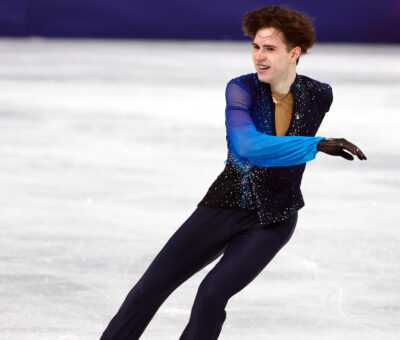 Figure skating
Shaidorov Wins Kazakhstan First Olympic Men’s Figure Skating Gold
Kazakhstan’s Shaidorov Wins Historic Men’s Figure-Skating Gold Mikhail Shaidorov, 20, became Kazakhstan’s first Olympic men’s figure-skating champion Friday night in Milan, overturning a 4.9-point deficit with a near-perfect free skate that scored 198.64 and lifted him to 291.58 overall. Shaidorov Lands Four Quads to Overtake Kagiyama Skating last among medal contenders, Shaidorov opened with a triple Axel–quad Salchow combination that drew mostly +4 and +5 grades of execution. Three more quads followed before a slight under-rotation on his final quad Lutz trimmed fewer than two points. The personal-best segment catapulted him past Japan’s Yuma Kagiyama and set off a wave of Kazakh flags in the upper bowl. “I simply performed everything my coaches and I drilled for years,” Shaidorov told reporters, voice cracking. “Life rewarded me tonight.” Malinin Quad Gamble Fails, Drops to Eighth Ilia Malinin entered the free skate with a short-program lead and the only Olympic quad Axel on record. The plan collapsed in 30 seconds: he popped the Axel, doubled a planned quad loop, and fell on both quad Lutz and quad Salchow attempts. The 156.33 segment score—more than 80 points below his season high—left him 15th in the free and eighth overall. “The arena never stopped cheering, but inside I felt everything collapse,” the American said. He leaves Milan with team-event gold and a ticket to March’s World Championships in Prague. Japan Claims Silver and Bronze Yuma Kagiyama, 2022 Olympic silver medalist, touched down on a quad flip and under-rotated a quad Salchow yet totaled 280.06 for his fourth global runner-up finish. Teen teammate Shun Sato vaulted from ninth to third with a “Firebird” program that included two quad toes and a quad Lutz; 274.90 gave the 19-year-old his first individual Olympic medal. “I pictured my clean team-event skate and hit replay,” Sato said. Under-Rotation Calls Shuffle Top Ten Technical-panel scrutiny on jump edges and quarter-landings quietly reordered the standings. Korea’s Junhwan Cha brushed the boards after a quad-toe fall yet climbed to fourth on 273.92, nudging Canada’s Stephen Gogolev—186.37, the evening’s second-best free—into fifth by 0.14. France’s Adam Siao Him Fa and Italy’s Daniel Grassl each lost points on downgraded quad Lutzes, sinking to seventh and ninth, while Georgia’s Nika Egadze rose from 15th to 10th by avoiding any under-rotation calls on seven clean triples. Ten Men Top 180 Points for First Time Ten of 24 finalists broke the 180-point free-skate barrier, an Olympic-era record. Officials credit a relaxed resurfacing schedule and a midnight crowd that stayed loud until the final bow. “Everyone here can quad; tonight was about who kept their blades under them,” NBC analyst Tanith White said. The depth shows how fast the technical baseline has risen since Nathan Chen’s five-quad victory in 2022. Sources: International Skating Union event protocols; Milano Cortina 2026 media update
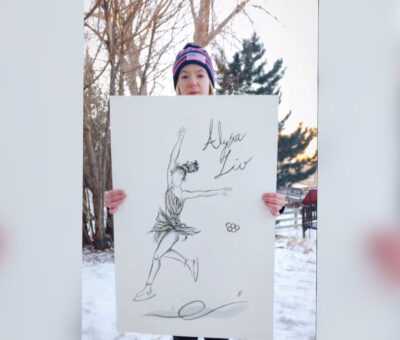 Figure skating
Sonja Hilmer Gifts Team USA Skaters Custom Ink Portraits in Milan
Hand-Drawn Silhouettes Welcome U.S. Skaters to Milan Olympic Village A life-size ink outline of every American figure skater waited inside the Milan Olympic Village last week, taped to a nightstand and rolled out on heavyweight Italian paper. Teammate Sonja Hilmer, 21, drew all 16 portraits between January’s U.S. Championships and the February 25 charter flight, turning arrival day into an autograph session before the athletes even unpacked. Coach’s Text Launches Four-Week Art Sprint Team leader Tiffany Hyden—Hilmer’s former solo-dance coach—sent a single request last August: create a “Milan-specific keepsake” that could lie flat in a suitcase, echo Italian fashion sketches, and ship before accreditation deadlines. Hilmer screen-grabbed competition photos, isolated each skater’s most recognizable shape—Ilia Malinin’s quad Axel preload, Madison Chock’s matador skirt flick—then projected the outlines onto 18-by-24-inch Blick paper. Imported Milanese ink and a size-6 round brush did the rest; one smear meant starting over. “A bad pull turned the sheet into fire starter,” she said. Hair Replaces Faces in Instantly Recognizable Outlines ISU costume rules make most skaters look similar from a distance, so Hilmer used hair as a fingerprint. Amber Glenn’s braided crown, Christina Carreira’s half-up rhythm-dance knot, and the wave Evan Bates creates when he releases partner Madison Hubbell became shorthand for identity. Men’s cuts were trickier: Jason Brown’s classic sweep required a single confident stroke, while Vincent Zhou’s shorter Olympic crop needed a dry-bridge technique to suggest texture under arena lights. “Buns, braids, fly-aways—each got its own nib width,” Hilmer noted. “The hair had to do the recognition work.” Athletes Post Reactions Within Minutes Skaters thought the tubes held venue maps until the paper unfurled. “Absolutely amazing—can’t wait to bring it home,” Glenn wrote on Hilmer’s Instagram. Ice dancers Carreira and Anthony Ponomarenko filmed a joint story tagged with the Italian tricolor emoji. Pairs skater Ellie Kam replied, “So insanely talented, Sonja.” From the practice rink Hilmer watched her phone explode: mid-session texts—“You captured the flip, thank you”—followed by her own triple-toe drill. Fan Demand Turns Gift Into Merchandise Fundraiser Within 48 hours Hilmer’s direct-message queue held 400 print requests. She now sells 8-by-10 reproductions and waterproof vinyl stickers through her Instagram, donating 30 percent to the Figure Skating Memorial Fund that once covered her ice-time bills. A Denver print shop handles bulk orders while she competes in the women’s short program; the scanner in her carry-on couldn’t keep up. “I never planned a side hustle,” she said, “but if the sport can fund the art that celebrates it, the loop feels right.” Sources: U.S. Figure Skating Team Media Guide; Sonja Hilmer Instagram; Blick Art Materials; Robin Ritoss Photography