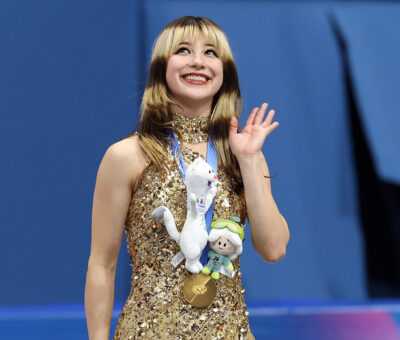
Alysa Liu, 20, posted the highest women’s free-skate score of the Milan Winter Games on Saturday, becoming the first U.S. woman to win Olympic figure-skating gold since Sarah Hughes in 2002 and ending a 24-year American drought.
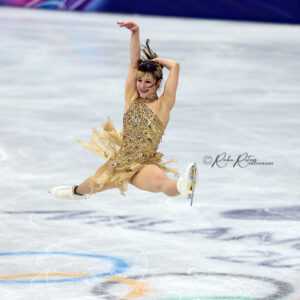
Liu’s 150.20 Free Skate Flips Final Order
Skating third in the last group, Liu opened with a textbook triple Lutz-triple toe and later added a triple Lutz-double Axel-double toe cascade—combinations no rival matched for base value. Judges gave positive grades of execution on seven of 12 elements, lifting her free-skate segment to 150.20 and her combined total to a career-best 226.79. The score vaulted her past overnight leader Ami Nakai and reigning world champion Kaori Sakamoto, erasing a 3.42-point short-program deficit.
Secret Program Swap Pays Off
Liu had disguised her strategic pivot all week, rehearsing a Lady Gaga medley while quietly returning the Donna Summer remix she used to win the 2025 world title to her locker. Choreographer Massimo Scali said the switch—revealed only when the six-minute warmup began—was designed to “lock her into muscle memory she already trusted.” The opening synth sting of “Hot Stuff” drew an audible gasp; by the final cymbal crash, the arena was on its feet and the scoring table was revising U.S. Olympic history.
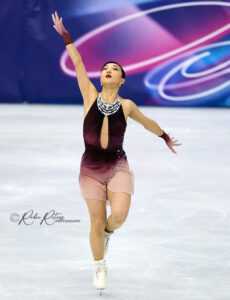
Sakamoto, Nakai Complete Japanese Sweep
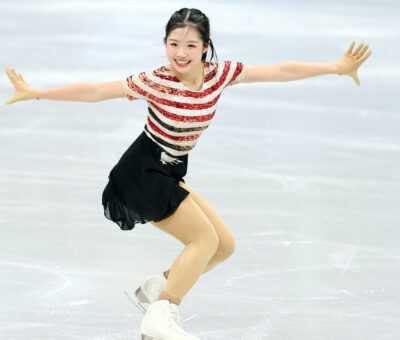
Kaori Sakamoto’s Edith Piaf free skate started with a double Axel-triple toe-double toe worth 12.60 base points, but a tilted triple flip forced her to drop a planned combination and cost roughly three points. She still earned 147.67 for the segment and 224.90 overall—1.89 behind Liu—good for silver and Japan’s fifth figure-skating medal of the Games. Seventeen-year-old Ami Nakai, bidding to become the youngest women’s champion since Tara Lipinski, popped the second jump of an early Lutz-toe and slipped to ninth in the free, yet her short-program buffer held for bronze at 219.16 and gave Japan its largest Olympic figure-skating haul since 1908.
Pipeline Behind New U.S. Champion
Liu becomes only the eighth American woman to top an individual Olympic podium, and her post-Milan plans—college courses, show tours, “maybe some pottery”—leave the national program searching for successors. Amber Glenn’s 147.52 free skate, third-best of the night, rocketed her from 13th to fifth and signaled veteran depth. Nineteen-year-old Isabeau Levito, undone by a downgraded loop, still owns the second-highest season total among U.S. women. Junior-world medalist Sophia Goldstein, 16, sits next in line, giving the federation a three-tier ladder to defend the reclaimed momentum.
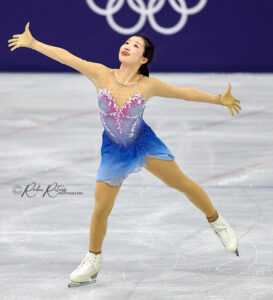
From Burnout to Beijing-Style Breakthrough
Liu’s win carries a mental-health backstory officials hope reshapes development protocols. After quitting elite training in 2022 she volunteered at a San Francisco food bank, took weekly sports-psychology sessions, and logged more hours on a pottery wheel than on ice for six straight months. “I’m not a unicorn,” she said. “I’m proof that stepping away can be the healthiest way to step up.” U.S. Figure Skating has since expanded grants for off-ice counseling and now prints crisis-line information on all qualifying-event badges.
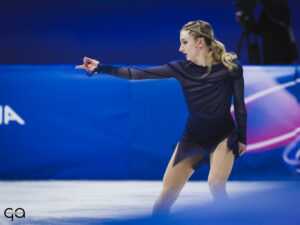
Action Steps for Young Skaters
- Block one calendar hour every week for a non-skate activity—music, art, tutoring—so identity isn’t welded to placement sheets.
- Coaches: add a 1-to-5 mood prompt to daily training logs; share red-flag trends with parents before they harden into burnout.
- Parents: pre-plan one competition-free weekend each month; treat it as non-negotiable family time, not a reward.
- Club boards: budget for on-site mental-health staff at regionals and post national crisis-line numbers in every event program.
Source: U.S. Figure Skating communications


Comments